


Latest news
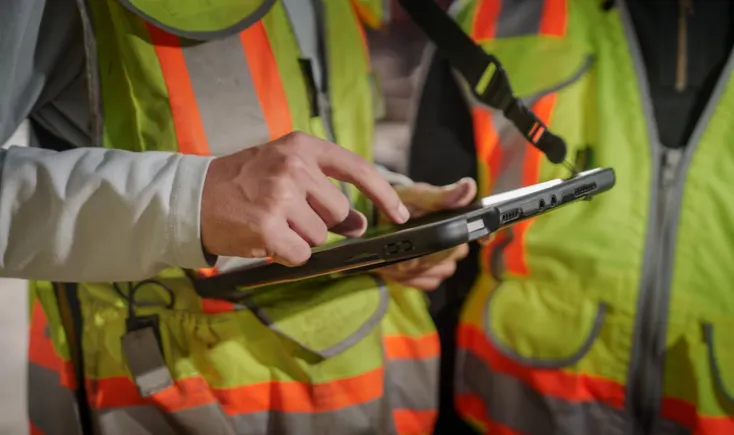
U.S. data center construction reached $77.7 billion in 2025, a 190% year-over-year increase, and owners' requirements for construction safety and compliance have significantly risen. Contractors must address new standards such as digital audits, personnel training records, and approval for high-risk operations, while also facing labor shortages and the challenge of experienced safety personnel being lured away by high-paying projects. Leading general contractors are delegating document management responsibilities to on-site crew leaders, forming a bottom-up data flow, and gradually promoting this model to commercial, healthcare, and industrial projects, making it a company-wide operational standard.

Judge James Wesley Hendrix of the U.S. District Court for the Northern District of Texas ruled to vacate three provisions of the Davis-Bacon Act from the Biden administration, which had sought to extend prevailing wage rules to subcontract employees beyond construction workers. The Associated General Contractors of America welcomed the decision, but other lawsuits remain pending.

Construction technology company Skillit announced partnerships with DPR Construction and Suffolk Technologies, whose venture arms have made equity investments in Skillit. Skillit claims to have the nation's largest network of vetted skilled workers, and its AI-driven platform aims to improve recruitment efficiency in the construction industry.

On the fifth anniversary of the collapse of the Champlain Towers South, Florida structural engineer Greg Batista writes that periodic inspections alone can no longer address the risks of building aging. As technology costs decline and regulations evolve, continuous structural monitoring is becoming the industry's new standard, helping engineers shift from reactive to proactive prevention.

This article explores how Gen Z (born after 1997) emphasis on work-life balance affects employment in the construction industry. Through case studies of safety specialist Corey Silverman, assistant project managers Hannah Hsi and Lauren Welsh, and consultant Fulton Cure, it analyzes how contractors should adapt to this generational shift, providing flexibility while ensuring output.

Superior Construction plans to break ground later this year on a two-story, 13,000-square-foot training center at its Jacksonville, Florida headquarters, equipped with classrooms, offices, heavy equipment simulators, and a gym. CEO Nick Largura says the move aims to address the aging skilled workforce by injecting fresh talent into the industry through hands-on training and mentorship.

As AECO organizations explore AI and more advanced digital workflows, a prerequisite is becoming clear: project data must be more accessible, governed, and connected to support better decisions. The 2025 RICS report highlights this need, and Hexagon Multivista's 2025 data shows the volume of information its clients generate in a single year: 15,525,207 photos and 384,279 scans. However, more data does not automatically simplify construction management. The issue is not data volume but decision friction—teams struggle to quickly find, understand, and apply the right information. Solutions like Hexagon Multivista Hub aim to integrate project data into a connected context, reducing the information gap between office and field, thereby turning data into true construction intelligence.
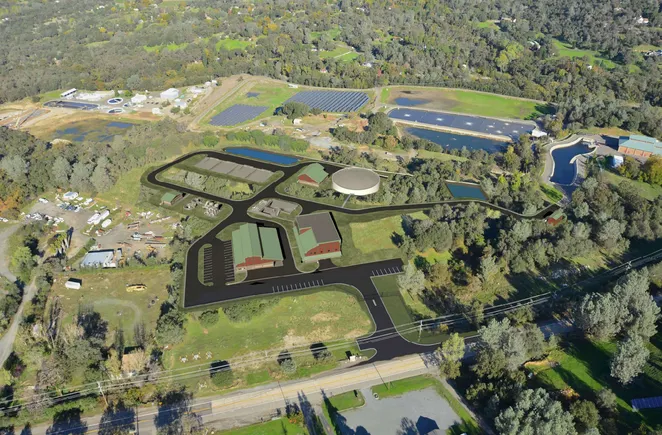
Following a $200 million water project win in Nevada in April, Carollo Engineers has secured a $210 million construction management contract for Phase 1 of the Ophir Water Treatment Plant in Placer County, California. Phase 1 will add 10 million gallons per day of treatment capacity, serving approximately 10,000 households.

Construction ERP platforms were originally designed for data storage, compliance support, and report generation, rather than data interpretation, risk alerts, or automation of routine decisions. The new generation of AI-native construction ERP is changing this—its intelligence is not added through integrations or third-party tools but is embedded at the system's core. This article explains the true meaning of AI-native, the application of AI at decision points, how task agents facilitate adoption, and measurable business value, and introduces how CMiC's NEXUS product reduces construction risks with AI, unified data, and automation.
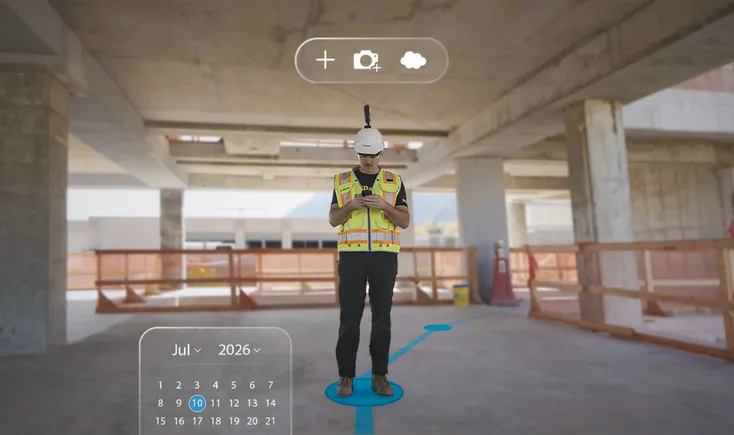
Facing rework, disputes, and closeout challenges, contractors are turning to 360-degree reality capture. Trimble ProjectSight 360 Capture integrates AI-driven reality records directly into the project management platform, automatically geolocating site photos and videos to drawings and creating a searchable timeline, thereby reducing risk, accelerating dispute resolution, and optimizing profits.