


Latest news

The construction industry has long faced challenges of low profit margins and slow productivity growth, with safety often viewed as a resource drain competing with schedule and cost. However, with the application of digitalization and AI technologies, the administrative burden of safety management has been greatly reduced, instead enhancing project efficiency and profitability. The author of this article argues that contractors who treat safety as a profit driver will gain a competitive edge in the coming decade.
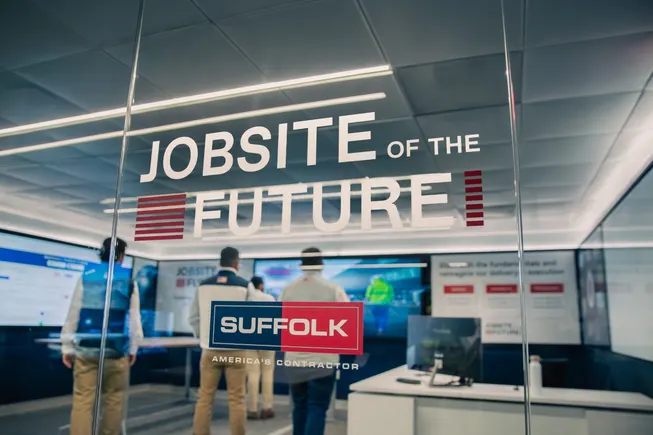
Suffolk Construction has announced the launch of its "Future Site" initiative, which will embed AI engineers at construction sites nationwide to participate in project meetings and iteratively develop solutions across three key areas: design, scheduling, and processes. This move comes in response to rising costs and labor shortages, and leverages the company's over $100 million investment in data and technology. To date, the initiative has produced AI-assisted design review, procurement and delivery tracking systems, and an AI process tool for monthly payment applications.

The fragmentation of the construction industry attracts private equity mergers and acquisitions, but vertical integration and affiliated structures may trigger conflicts of interest, governance deficiencies, and short-term pressures, requiring enhanced disclosure and independent oversight.

The latest construction economic report shows that construction activity in April 2026 may begin to stabilize beyond data center construction: planning activity has improved, total starts have surged, backlog orders have risen to a 10-month high, and job vacancies have reached their highest level in 2026. However, growth momentum is still mainly driven by data centers, public infrastructure, and AI-related projects, with large contractors holding most of the backlog, while private construction sectors such as manufacturing remain weak and material costs are rising again.

Construction companies often hit growth bottlenecks due to a lack of clear organizational structure. This article uses the case of a subcontractor with annual revenue of approximately $15 million to illustrate how, through internal talent assessment, role restructuring, and support system development, teams can be expanded and performance doubled without adding external hires.
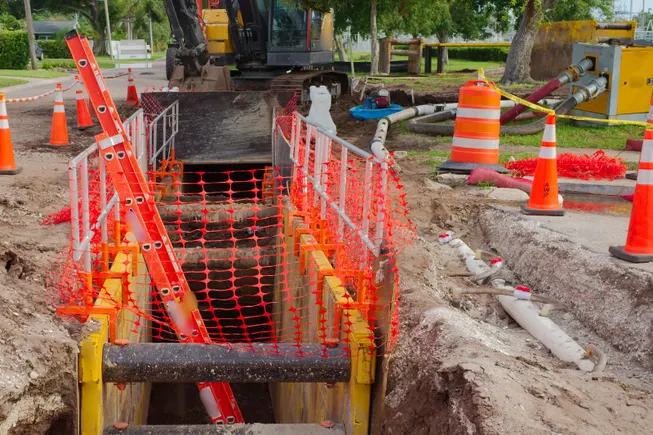
NUCA designates June as Trench Safety Month and plans to hold its annual trench safety stop work event at hundreds of job sites nationwide from June 15 to 19, including safety training, educational seminars, toolbox talks, and on-site rescue demonstrations. Supported by OSHA and the Trench and Excavation Safety Task Force, the event aims to address trench collapses, one of the most persistent risks in the construction industry.

Since tariffs took effect in early 2025, construction costs have surged, exposing the drawbacks of traditional project models. By identifying material risks early and optimizing procurement strategies, pre-construction is shifting from the periphery to the core, becoming a key reliance for owners navigating uncertainty.

On June 9, a federal grand jury in the U.S. District Court for the Northern District of Illinois indicted Ryan Ross, a former property supervisor at the Chicago Housing Authority, and builder Vanessa Rhodes. The indictment alleges that between 2023 and 2024, Ross received over $421,000 in kickbacks from Rhodes in exchange for using his position to award housing renovation contracts worth more than $4.8 million to companies affiliated with her. Each faces eight counts of honest services fraud, carrying a maximum sentence of 20 years in prison.
Meta announced on Monday the launch of America's Workforce Academy, a $115 million workforce development program aimed at providing free industry skills training and guaranteeing participants job opportunities in data center construction projects. The program will first be implemented in Indiana, Louisiana, Ohio, and Texas, with participants earning certification from the National Center for Construction Education and Research (NCCER). Meta calls it the largest private-sector commitment in U.S. history to skills training with guaranteed employment.

A coalition of diversity and inclusion advocacy groups, in a lawsuit against U.S. President Trump, has asked a Maryland federal judge to block his executive order targeting diversity, equity, and inclusion (DEI) activities by federal contractors. The plaintiffs argue the order violates the First and Fifth Amendments and constitutes irreparable harm.