


Latest news

A structural beam was damaged at an office-to-residential conversion project on East 42nd Street in Manhattan, New York City, leading to evacuations and road closures. Officials said reinforcement has begun, and engineers warned that the top floors may have tilted.

Alberto Gonzalez, head of business development at Cintra, says the U.S. infrastructure funding gap continues to widen, and private sector participation in critical infrastructure construction will become more common. He outlines the complexity and urgency conditions suitable for P3 projects, emphasizes that urban growth corridors, long-term economic prospects, and political stability are core to site selection, and notes that critical infrastructure can significantly reduce the risk of political interference in projects.

Several U.S. federal agencies submitted regulatory updates to the White House Office of Management and Budget on Friday, publishing timelines for multiple proposed and final rules covering independent contractor classification, tip credit, minor work hours, pregnancy worker protections, EEO-1 reporting repeal, and H-1B visa reform. These actions are part of the Trump administration's efforts to reshape the federal employment law compliance system, particularly in the areas of anti-discrimination and wage and hour regulations.
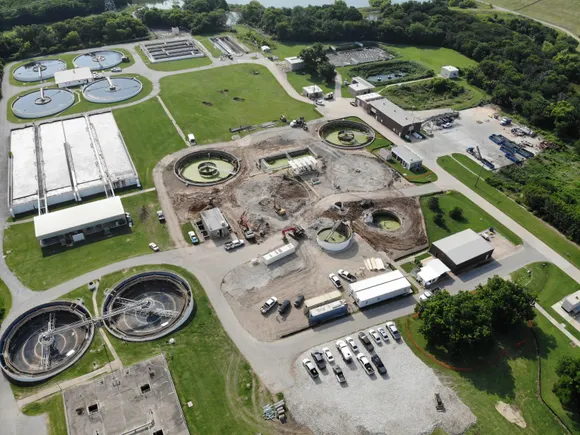
Crescent Constructors (a subsidiary of Zachry Construction) has won a wastewater treatment plant expansion project valued at approximately $89 million in Lewisville, Texas, increasing capacity from 12 million gallons per day to 16 million gallons per day.

The Fluor and Walsh Construction joint venture announced that Phase One of the Chicago Transit Authority's Red and Purple Line Modernization Project has achieved substantial completion. The project has a contract value of $2.1 billion and is expected to reach final delivery by November 2026.
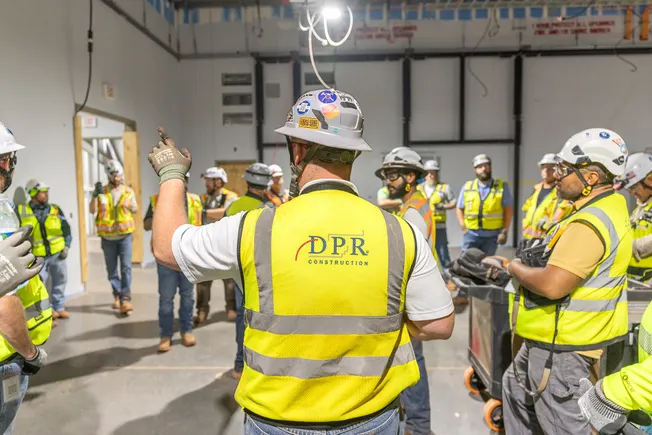
As the number of large-scale projects in core markets grows as expected, the construction industry is undergoing profound transformation. These projects not only adopt new delivery methods such as prefabrication but also have a significant impact on talent development: both administrative roles and skilled trades gain leapfrog growth opportunities. DPR data shows that over 850 of its nearly 6,500 administrative employees have already been involved in large-scale projects; on the skilled trades side, a single project at peak times requires more than 6,000 skilled workers. Through internal training programs, union apprenticeship initiatives, and owner investments, the industry is accelerating the building of future-oriented career pathways.
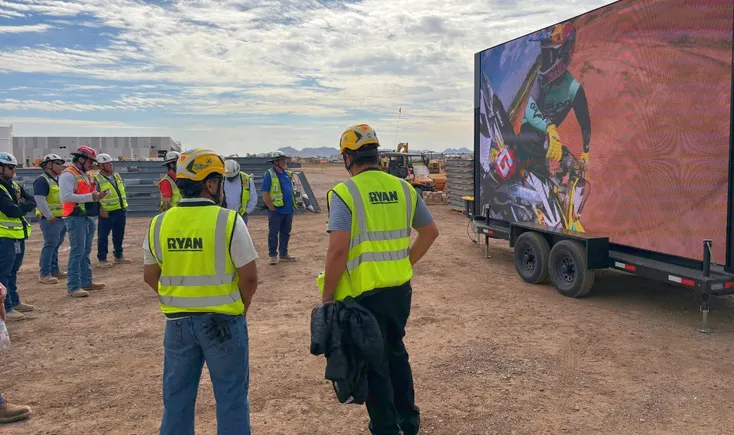
With the accelerating pace of construction sites, traditional communication methods are no longer sufficient. Leveraging real-time updates, high visibility, and technological integration, digital displays are driving the digital transformation of construction sites across four dimensions: safety alerts, team collaboration, technology integration, and space upgrades.
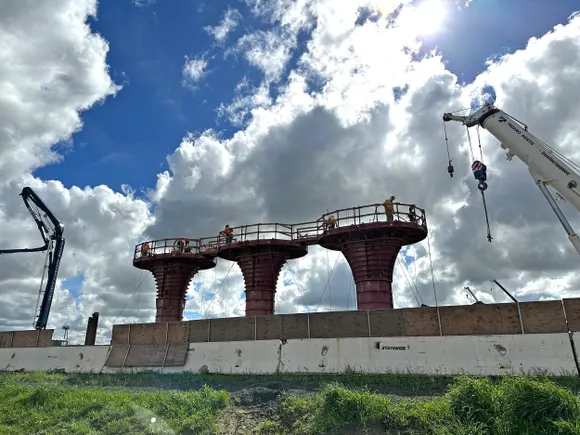
After federal funding was cut, the California High-Speed Rail Authority entered into joint development agreements with several companies to seek private investment. However, facing a funding shortfall of up to $87 billion, experts are skeptical about whether the private sector can step in to save the day. Meanwhile, cost overruns and financing failures in other private rail projects have also cast a shadow over the prospects.

According to U.S. Census Bureau data and industry association analysis, private nonresidential construction spending fell 0.3% month-over-month in May and 6.6% year-over-year, marking seven consecutive months of decline, mainly dragged down by reduced manufacturing-related spending. Public nonresidential project spending edged up 0.4% month-over-month and rose only 0.3% year-over-year. Data center construction remains the primary growth engine, but warehouse and office spending fell 8.5% and 11.9% year-over-year, respectively. Industry groups are urging Congress to quickly pass new highway and transportation legislation to sustain momentum in public infrastructure investment.

Suffolk Construction embeds AI engineers into project teams through its 'Future of Construction' initiative to address data fragmentation and improve efficiency. Vice President Doug Harrison emphasizes the importance of data quality and consistent technology deployment, and shares considerations on standardizing tools, training strategies, and build-versus-buy technology solutions.