


Latest news
Bank of America announced on Wednesday that it will provide $250 billion for financing key infrastructure projects, covering digital, energy, and core infrastructure sectors, aiming to strengthen U.S. competitiveness, promote employment, and energy security. The plan aligns with the 250th anniversary of American independence in 2026, with funds to be deployed by July 4, 2027.

This week's construction industry news is dense: Stanley Black & Decker announces a $1 billion investment plan to drive innovation and manufacturing; Jacobs opens a new office in Atlanta and secures a Georgia transportation contract; Cumming Group acquires a New York project management firm; Tutor Perini and Granite each secure new projects.

Teresa Maxwell, DBE Compliance Officer for Skanska Civil Engineering Western Region, stated that small business outreach has become more efficient due to technological advancements, but communication and matching challenges remain in large projects. She believes that although federal DBE certification adjustments bring uncertainty, they also present an opportunity for owners to deepen community engagement and optimize project goals.

During the first-half 2026 results call, Balfour Beatty revealed that its US construction business has returned to profitability, with operating profit reaching £22 million. CEO Philip Hoare highlighted data center and aviation projects as key growth drivers and emphasized the effectiveness of collaboration with long-term clients such as Wells Fargo.
Meta announced a new partnership with the North America's Building Trades Unions (NABTU) aimed at providing training support for skilled workers nationwide and developing registered apprenticeship programs related to data center construction. This move is Meta's latest effort to alleviate community concerns triggered by its large-scale data center projects in various locations. Previous surveys have shown declining public support for the pace of data center construction in the U.S., with over 300 localities having implemented bans or moratoriums.

The Pennsylvania Transportation Commission approved a 12-year, $90 billion infrastructure investment plan on August 6, covering roads, bridges, transit, airports, rail, and active transportation. The plan represents an increase of over 3% from the 2025 version and has been submitted for federal review.

When introducing technology to construction sites, the key question is no longer "what new technology is available," but "how can existing technology help my site." This article brings together insights from engineers, consultants, and academics, analyzing technology applications and sharing best practices.
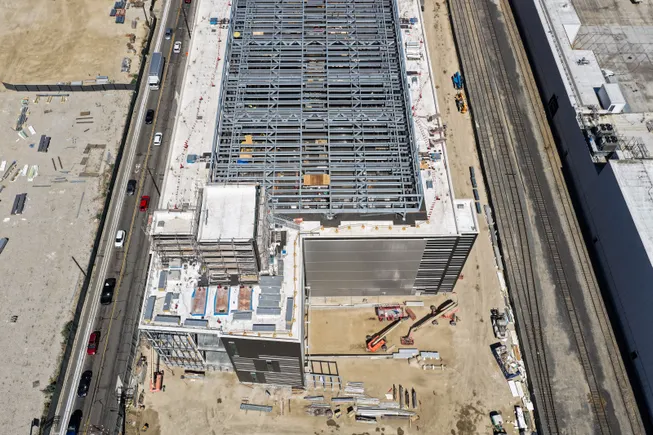
According to a report released by the Associated Builders and Contractors (ABC) in July, construction backlog fell sharply month-over-month to its lowest level since January. Contractors' average backlog was 8 months, down 0.8 months from both June and the same period last year. ABC Chief Economist Anirban Basu noted that the data center boom masks weakness in other sectors, with small and mid-sized contractors facing particularly severe challenges.

The U.S. civilian labor force participation rate for those aged 55 and over dropped to 36.9% last month from 38.1% in the same period last year. RSM US Chief Economist Joe Brusuelas stated that this 'historic' labor market contraction strengthens the business case for companies to adopt AI. He expects that as baby boomers retire and immigration policies tighten, the U.S. labor supply will continue to shrink, keeping demand for AI investment strong.

During AECOM's third quarter fiscal 2026 earnings call, the company stated that despite a quarterly net loss due to a $337 million charge from a construction management project, its data center, water, and defense business pipelines continue to expand, and management remains optimistic about infrastructure investment prospects.