


Tech
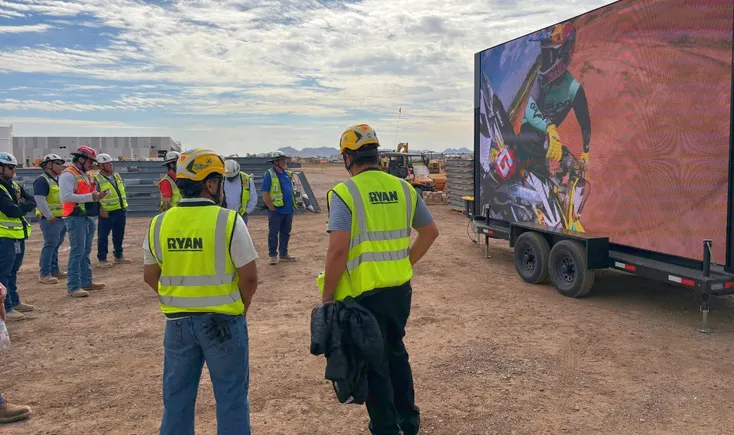
With the accelerating pace of construction sites, traditional communication methods are no longer sufficient. Leveraging real-time updates, high visibility, and technological integration, digital displays are driving the digital transformation of construction sites across four dimensions: safety alerts, team collaboration, technology integration, and space upgrades.

Suffolk Construction embeds AI engineers into project teams through its 'Future of Construction' initiative to address data fragmentation and improve efficiency. Vice President Doug Harrison emphasizes the importance of data quality and consistent technology deployment, and shares considerations on standardizing tools, training strategies, and build-versus-buy technology solutions.

Construction technology company Skillit announced partnerships with DPR Construction and Suffolk Technologies, whose venture arms have made equity investments in Skillit. Skillit claims to have the nation's largest network of vetted skilled workers, and its AI-driven platform aims to improve recruitment efficiency in the construction industry.

As AECO organizations explore AI and more advanced digital workflows, a prerequisite is becoming clear: project data must be more accessible, governed, and connected to support better decisions. The 2025 RICS report highlights this need, and Hexagon Multivista's 2025 data shows the volume of information its clients generate in a single year: 15,525,207 photos and 384,279 scans. However, more data does not automatically simplify construction management. The issue is not data volume but decision friction—teams struggle to quickly find, understand, and apply the right information. Solutions like Hexagon Multivista Hub aim to integrate project data into a connected context, reducing the information gap between office and field, thereby turning data into true construction intelligence.
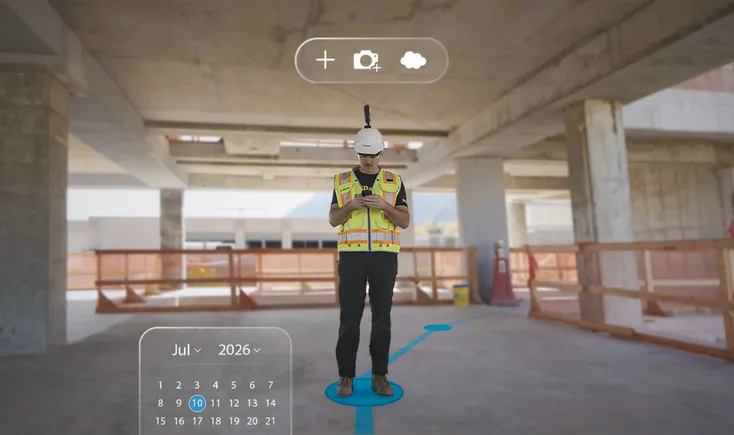
Facing rework, disputes, and closeout challenges, contractors are turning to 360-degree reality capture. Trimble ProjectSight 360 Capture integrates AI-driven reality records directly into the project management platform, automatically geolocating site photos and videos to drawings and creating a searchable timeline, thereby reducing risk, accelerating dispute resolution, and optimizing profits.

Construction ERP platforms were originally designed for data storage, compliance support, and report generation, rather than data interpretation, risk alerts, or automation of routine decisions. The new generation of AI-native construction ERP is changing this—its intelligence is not added through integrations or third-party tools but is embedded at the system's core. This article explains the true meaning of AI-native, the application of AI at decision points, how task agents facilitate adoption, and measurable business value, and introduces how CMiC's NEXUS product reduces construction risks with AI, unified data, and automation.
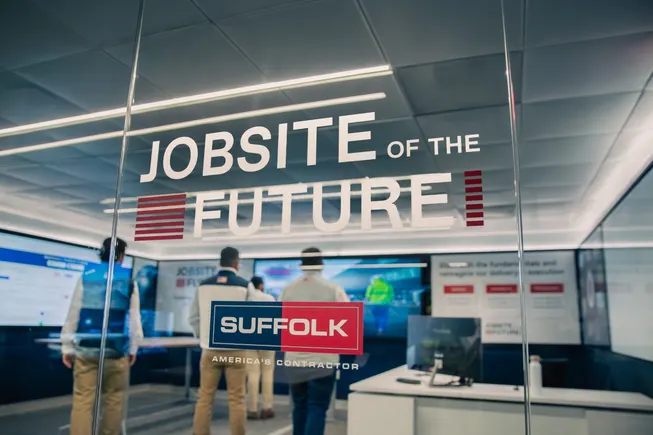
Suffolk Construction has announced the launch of its "Future Site" initiative, which will embed AI engineers at construction sites nationwide to participate in project meetings and iteratively develop solutions across three key areas: design, scheduling, and processes. This move comes in response to rising costs and labor shortages, and leverages the company's over $100 million investment in data and technology. To date, the initiative has produced AI-assisted design review, procurement and delivery tracking systems, and an AI process tool for monthly payment applications.
McCarthy Building Cos. announced a multi-year, multi-million-dollar strategic collaboration with Palantir, adopting its Artificial Intelligence Platform (AIP) to develop a connected AI operating system aimed at strengthening internal AI capabilities across design, estimation, and on-site construction. The partnership centers on McCarthy's AI-native system, Pulse, which is built on Palantir's Ontology technology, providing real-time insights and decision support to field teams.

Los Angeles-based heavy civil contractor Tutor Perini announced that its subsidiary Fisk Electric has won a $48 million contract to provide electrical engineering services for a 273,000-square-foot advanced manufacturing and data center infrastructure facility in Houston. The project involves AI hardware assembly and is expected to be completed by the end of 2026.

AI applications in the construction industry have moved from concept to practice, but purchasing AI tools does not equate to having the capability to use AI. This article proposes five key assessment questions to help owners and general contractors determine whether they are AI-ready in real project delivery, covering core dimensions such as data structure, decision boundaries, human review, security environment, and system integration.